
Teaching fronted adverbials in key stage 2 is a crucial part of developing children’s writing skills. Not only do they help children create more sophisticated and varied sentences, but they're also a key assessment focus in the National Curriculum. As teachers, we need to ensure children understand what fronted adverbials are, how to use them effectively, and why they make writing more engaging.
Whether you're introducing fronted adverbials to year 3 pupils or preparing year 6 for their SATs, this article provides clear explanations, practical teaching strategies and engaging activities to support your teaching. Let's explore how to make this sometimes-challenging concept accessible and enjoyable for your class.
Contents
- What is a fronted adverbial?
- Types of fronted adverbials
- Adverbial phrases in KS2
- Fronted adverbials in the National Curriculum
- Teaching tips and ideas
- Assessment and progression
What is a fronted adverbial?
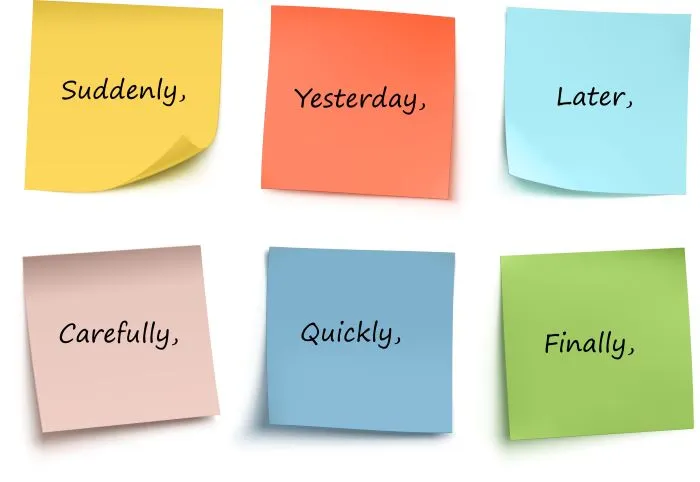
A fronted adverbial is a word or phrase that comes at the beginning of a sentence to describe the action that follows. It's always followed by a comma and provides detail about how, when, where, or why something happens.
Think of it as giving your sentence a powerful opening that sets the scene before the main action takes place. For example:
- Excitedly, the children opened their presents.
- Behind the old oak tree, a rabbit hopped quietly.
- Every morning, Sarah practises her times tables.
Types of fronted adverbials
When teaching fronted adverbials, it's helpful to break them down into these categories:
- How (manner): Carefully, Slowly, With great excitement
- When (time): Later that day, Before sunset, As quick as a flash
- Where (place): Under the bridge, In the distance, Next to the playground
- How often (frequency): Every day, Once a week, Occasionally
- Why (reason): Due to the rain, Because of the traffic
Adverbial phrases in KS2
While single-word adverbials are straightforward (like "Sadly," or "Tomorrow,"), adverbial phrases are groups of words that function in the same way. These give children more creative freedom in their writing.
Examples of adverbial phrases:
- As quick as lightning, the cheetah chased its prey.
- Throughout the stormy night, the wind howled fiercely.
- With trembling hands, she opened the mysterious letter.
Explore our complete collection of teaching resources for adverbs and adverbials.
Fronted adverbials in the National Curriculum
The National Curriculum introduces fronted adverbials in year 4, but many teachers find it beneficial to lay the groundwork in year 3. By year 6, pupils should be using them confidently in their writing.
Key curriculum requirements include:
- Understanding what fronted adverbials are
- Using them appropriately in writing
- Using commas correctly after fronted adverbials
- Identifying them in texts
Our complete lesson pack introduces year 4 to fronted adverbials and includes a step-by-step PowerPoint presentation and worksheets that cover both identification and usage, with all answers provided.
Teaching tips and ideas
Here are some effective ways to teach fronted adverbials:
- Start with movement activities. Get pupils to act out sentences with fronted adverbials. For example: "Gracefully, the ballet dancer twirled" or "Carefully, the scientist poured the liquid."
- Use writing frames. Provide sentence starters and get pupils to complete them: • Silently, ... • Under the table, ... • Later that evening, ...
- Play sorting games. Create cards with different fronted adverbials and get pupils to sort them into categories (how, when, where).
- Use visual prompts. Create displays using our common fronted adverbials word mat that children can refer to during writing tasks.
- Practice with creative writing. Use our creature description resource to inspire children to write imaginative sentences and help them understand how fronted adverbials can bring their descriptive writing to life.
Assessment and progression
Look for these signs that children are progressing:
- Starting with simple time connectives (First, Next, Then)
- Moving to single-word adverbials (Quietly, Carefully)
- Progressing to more complex phrases (As quick as a flash, Throughout the misty morning)
- Using varied and appropriate fronted adverbials independently in writing
Top tip: Remember that the goal isn't just to use fronted adverbials, but to use them effectively to enhance writing. Encourage pupils to think about whether their chosen fronted adverbial adds meaning to their sentence.
Keep encouraging your pupils to experiment with different types of fronted adverbials - it's a brilliant way to make their writing more varied and interesting!

